When Terrestrial Networks Fail, Your Critical Infrastructure Stands Still.
Hospitals, energy suppliers, water utilities, transport companies, food retailers, and municipal services — all classified as Critical Infrastructure (KRITIS) — rely on constant, stable communication. This is especially critical during disruptions, disasters, or cyberattacks.
The reality: it's already happening.
In recent years, cable breaks, flooding, attacks on telecommunications infrastructure, and power outages have shown time and again that relying solely on terrestrial communication is a serious risk — one that can lead to complete failure when it matters most.
Terrestrial Networks Are Vulnerable
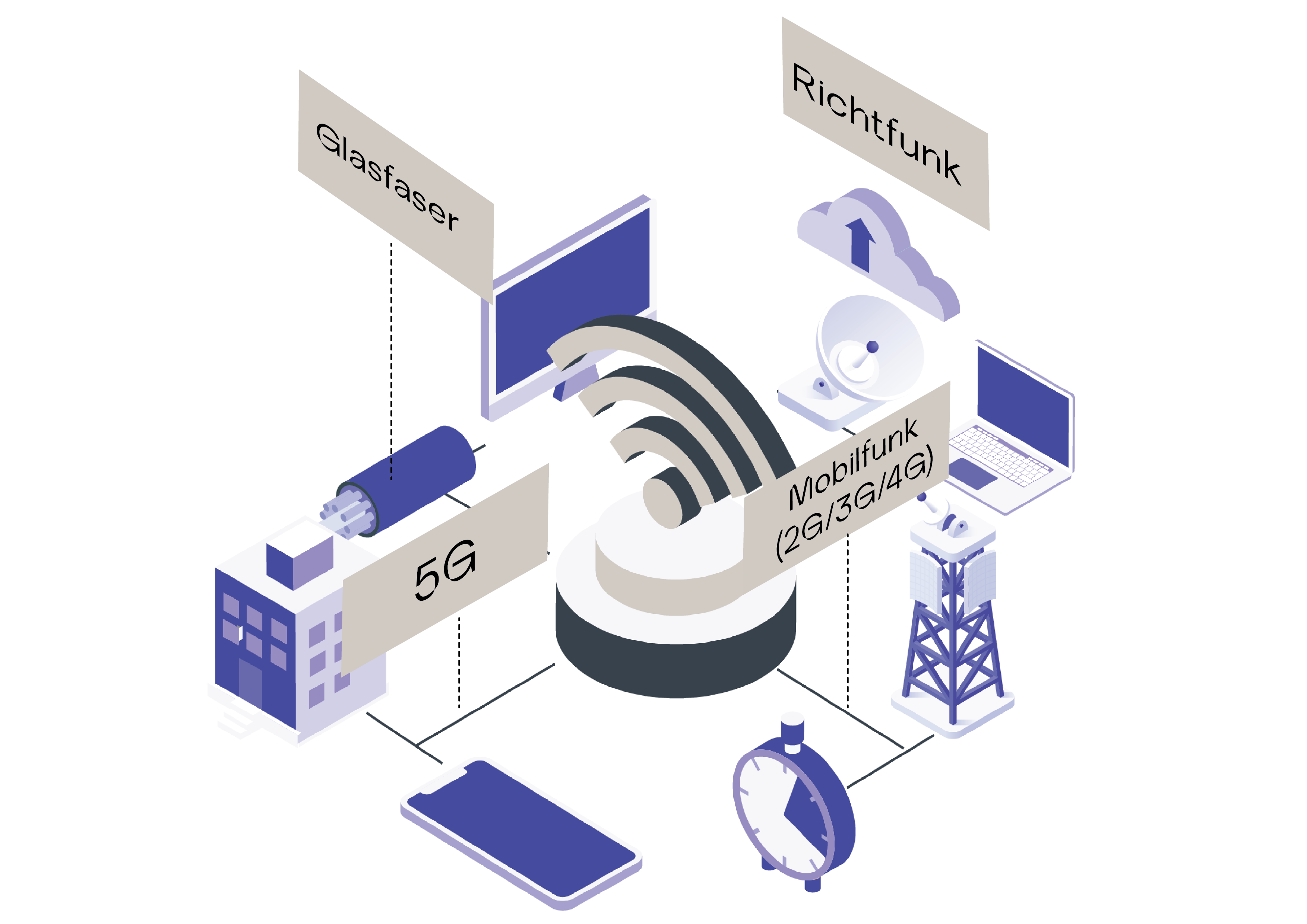
Fibre optics, mobile networks, 5G, and radio links can all fail at the same time — brought down by natural disasters, sabotage, cyberattacks, or power outages. They all share the same critical weaknesses: dependence on power supply, shared cable routes, and a high risk of simultaneous failure.
The result: communication breaks down at precisely the moment it's needed most.