



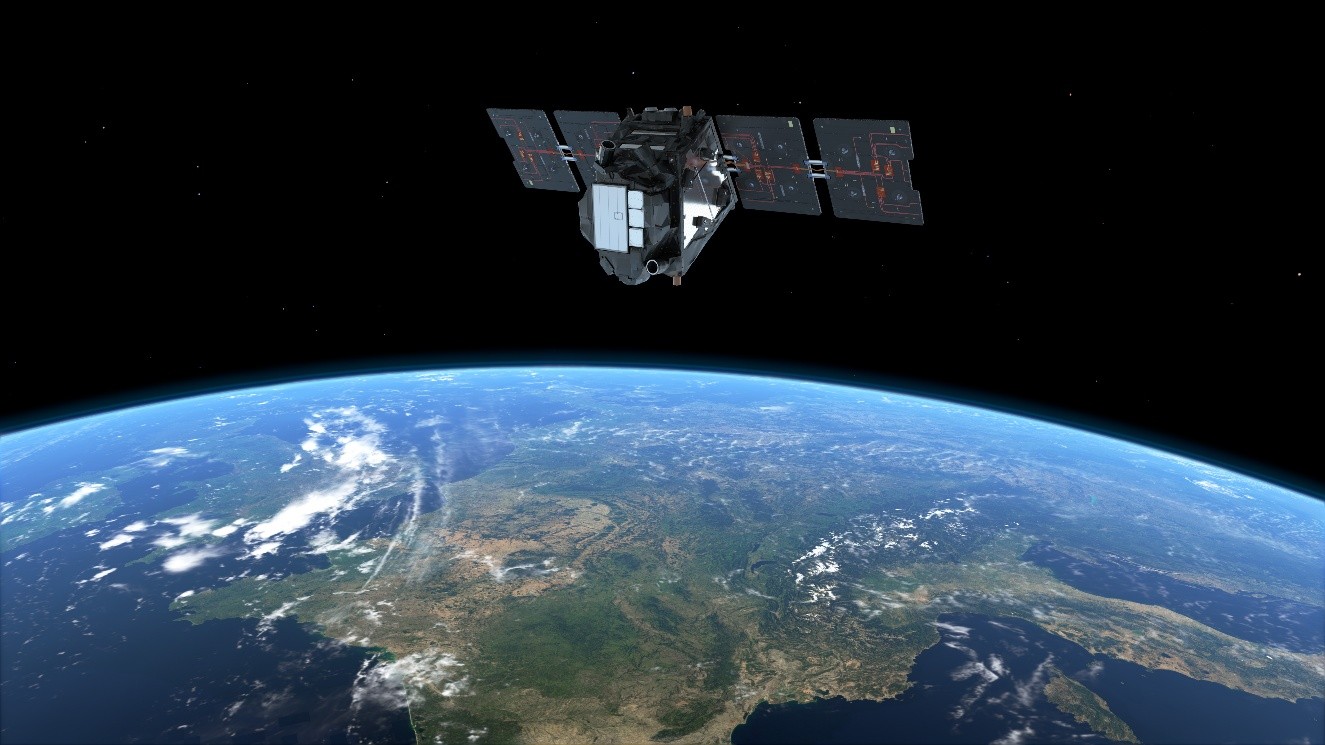
CREDIT ESA/Mlabspace
Using novel technology, the Fluorescence Explorer (FLEX) is a European Space Agency Earth Explorer satellite that will reveal crucial information about the health of the world's plants, which is critical to improving food security and agriculture.
Current Earth observation measures what plants reflect. FLEX measures plants' photosynthetic activity in real time. This direct biological signal reveals plant stress, productivity, and ecosystem health before visible damage occurs. The information gathered will be used to improve our understanding of how carbon moves between plants and the atmosphere and how photosynthesis affects the carbon and water cycles.
Launch and Mission Success
On 15 September 2026, FLEX successfully launched, together with Copernicus Sentinel-3C, aboard a Vega-C rocket from Europe's Spaceport in French Guiana. Now in orbit at an altitude of 814 km, FLEX is entering its critical early operations phase, with mission control teams worldwide activating its instruments and verifying all systems. The satellite's main payload, the FLORIS spectrometer, was developed by Leonardo at its Campi Bisenzio (Florence) site. The satellite is now positioned to begin its mission: providing humanity's first global view of vegetation fluorescence and photosynthetic activity from space.
FLEX will orbit in tandem with one of the Copernicus Sentinel-3 satellites, spaced roughly ten seconds apart, taking advantage of its optical and thermal sensors to provide an integrated package of measurements. The two datasets will be merged to increase the accuracy of vegetation health measurements.
Thales Alenia Space (67% Thales, 33% Leonardo) is the prime contractor for the design, test and build of the satellite, overseeing the development of the FLORIS instrument, built by Leonardo. The FLORIS instrument, developed by Leonardo in Campi Bisenzio (Florence), is the main payload of the mission and represents a breakthrough in Earth observation. It is a high-resolution imaging spectrometer specifically designed to detect the extremely faint fluorescence emitted by vegetation during photosynthesis, breaking the light down into its different colours from red to near-infrared—an indicator that cannot be measured from space with current systems. By capturing this subtle signal with unprecedented sensitivity and filtering out atmospheric and optical disturbances through advanced algorithms, FLORIS will provide direct insights into plant health and photosynthetic activity, enabling early detection of stress signals caused by drought, high temperatures or nutrient scarcity, and a more accurate assessment of ecosystem conditions. The data collected will contribute to a deeper understanding of the global carbon cycle and the interactions between vegetation, climate, and water systems, supporting applications ranging from agriculture and forestry to climate monitoring and food security.
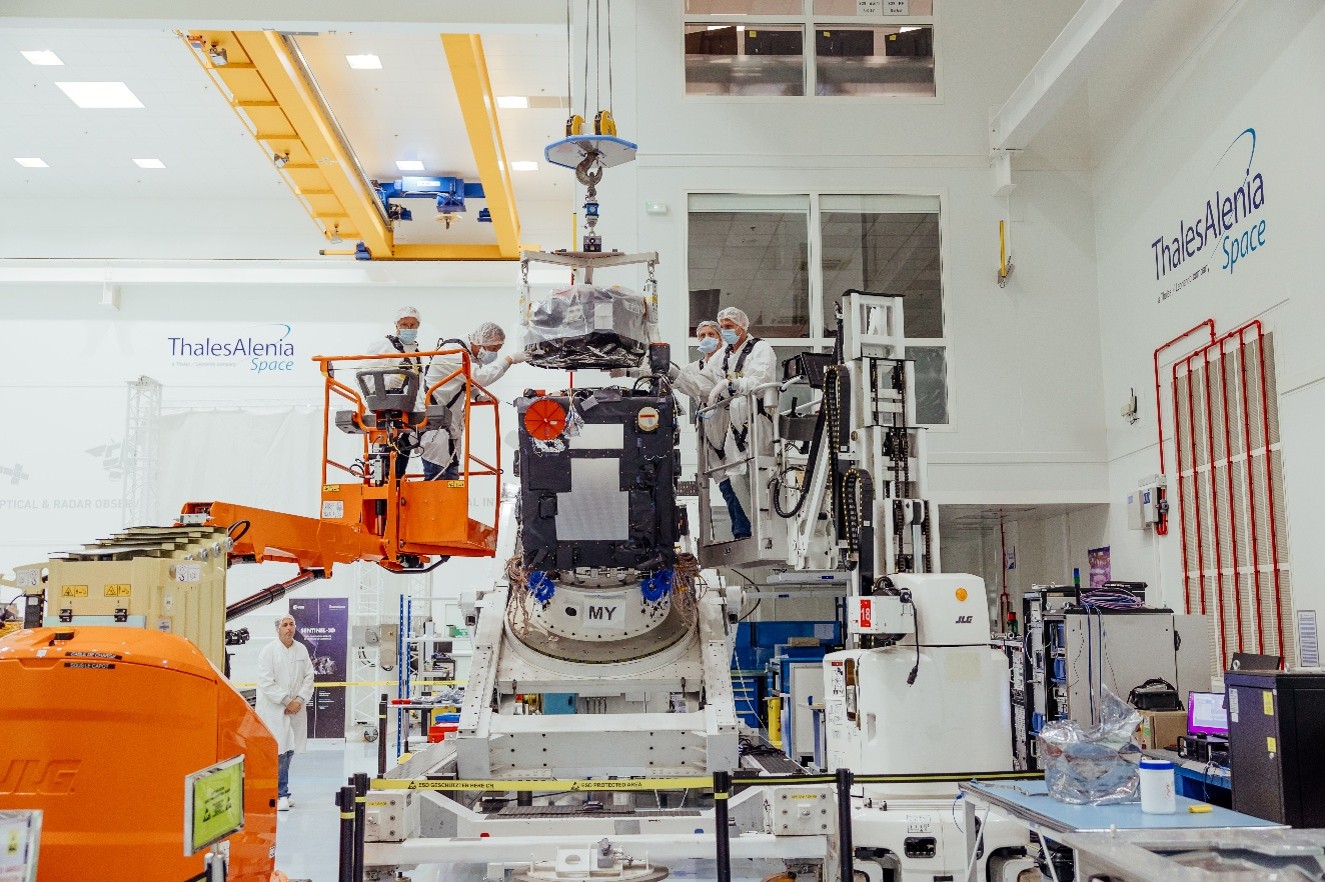
FLEX instrument meets its satellite - CREDIT Thales Alenia Space
In the FLEX mission, Telespazio Germany plays a central, mission-critical role within the Flight Control Team (FCT), from preparation through launch and routine operations, ensuring the spacecraft and its payload can be operated safely, efficiently, and at maximum performance. Our team covers a broad set of core operational responsibilities, including Data Handling, the Attitude and Orbit Control System (AOCS), Platform Data Handling, Communications, Power and Thermal systems, and the FLORIS Payload, as well as general system analysis and the spacecraft database. Telespazio staff also contribute to the FLEX simulation campaign and LEOP (Launch and Early Orbit Phase). Our colleagues in ESOC are actively involved in mission preparation through simulations leading up to LEOP. In addition to technical support, Telespazio Germany contributes through our Administrative and Management Services and ICT. Congratulations to everyone; this mission is the result of months of dedication, collaboration, and expertise across every corner of our team.
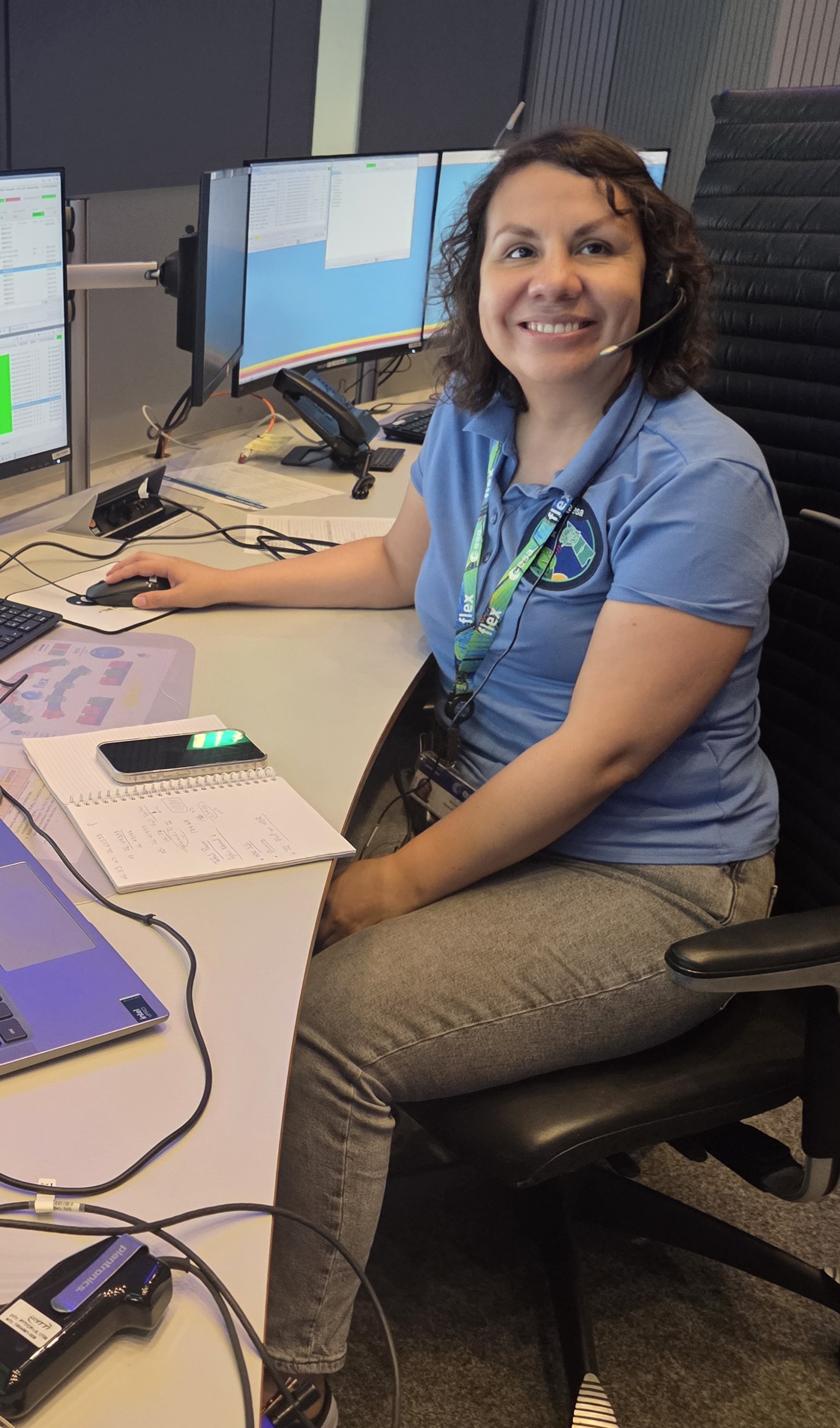
Alexandra Lora, Spacecraft Operations Engineer at Telespazio Germany for ESA’s FLEX mission. CREDIT: ESA